Introduction
Define the idea clearly: a city facade becomes a canvas, and light becomes structure. Tonight, a sky laser traces the seamlines of a downtown tower as if they were gridlines on a map. Many teams now look at laser light for building solutions because fixtures can push beams with under 1 mrad divergence, hold steady in wind, and draw less power than old flood arrays. In one test (late fall, light rain), a 1.2 kW unit reached 10–12 km visibility, with under 3 cm pointing drift and tight thermal management. That is not hype, just good optics. Yet numbers alone do not tell the full story—especially when safety zones, control latency, and content mapping add real-world limits. So here’s the question: what do we expect from building-scale lasers over the next two years, and what should we stop expecting from them? The answer lives between hardware physics and site logistics (and a bit of city policy). Let’s set the stage, compare options, and see where this tech actually outperforms. Next, we’ll dig into the hidden flaws in the usual playbook and why they matter.
Where Traditional Building Lights Fall Short
What actually breaks first?
Let’s be direct. When teams spec laser light for building systems, they often compare them to projectors and floodlights. That is fair—but incomplete. Projectors fight ambient light, throw distance, and lens losses. Big floods waste lumens into air, need huge power converters, and wash colour. Beam divergence on many legacy rigs creeps past 3–5 mrad, so edges go soft before the content leaves the plaza. Look, it’s simpler than you think: the weak link is not always brightness; it is control accuracy and heat. Without solid thermal management, galvanometer scanners drift; content warps; maintenance goes up. And compliance matters. IEC 60825-1 zones and observer paths shape what you can do on a live site—funny how that works, right?
The quieter pain points are operational. Content pipelines lag, so frames stutter on windy nights. Weatherproofing fails at seams, not casings, and IP65 labels do not fix cheap cable glands. Power spikes trip older drivers. Redundant PSUs help, but bad grounding makes noise in DMX and Art-Net links. Then there’s alignment. Facade mullions move micro-millimetres with temperature, so your map slips by midnight. Traditional fixes—more brightness, bigger housings—do not solve the core issue. You need tight modulation bandwidth, sturdy mounts, and predictable heat paths. In other words, clean signal in, clean beam out. The rest is site craft and patient calibration. Direct, yes. But that’s the layer most teams discover only after the first rainy load-in.
Next-Gen Principles and How They Change the Skyline
What’s Next
Now zoom out and look forward. The shift is not just brighter diodes. It is better control of the beam and the loop that guides it. New builds use fibre-coupled diode banks, lower-noise drivers, and smarter galvanometer scanners with tighter PID tuning. Add edge computing nodes at the roofline to pre-process motion data, and you cut latency in half. Active stabilization—via IMU and photodiode feedback—keeps pointing error low even when the mount flexes. Wider modulation bandwidth (30–100 kHz) helps render crisp strokes without flicker. Weather? Robust IP65 housings help, but the real win is sealed airflow with liquid cooling plates that actually wick heat. When sourcing from a capable sky laser factory, ask about beam divergence consistency across temperature, not just spec-sheet minimums. Small detail, big payoff.
Comparatively, this new stack leaves projectors and floods behind on precision per watt. It also makes shows safer by design—geofencing, soft limits, and auto-shutters tie into mapping software. PWM dimming is cleaner, so gradients hold on glass and stone without banding. Adaptive optics are coming next for fine tilt, and hybrid MEMS/galvo steering may shave more weight. Content flows improve too, with cloud-to-edge sync that survives spotty Wi‑Fi. The net result: fewer site hacks, more reliable nights, and creative range that feels bigger than the hardware. If you plan a skyline piece next season, treat the system like a control problem first, a brightness problem second—funny how predictable that is, right?
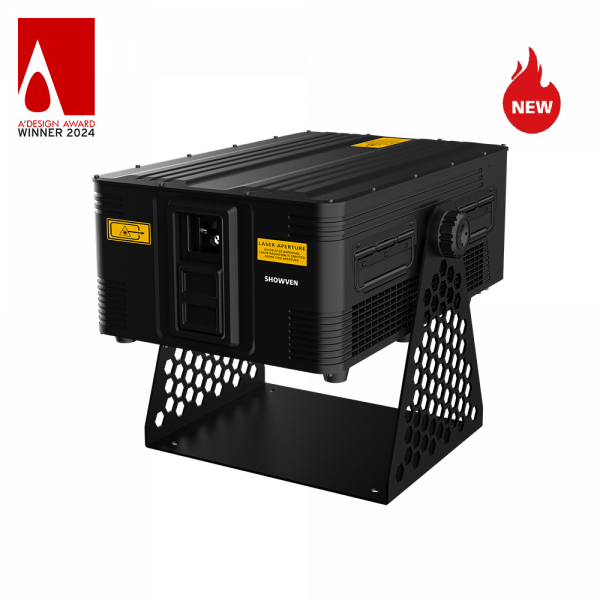
To wrap up with practical guidance, here are three smart checks before you buy or rent. First, verify effective beam quality under heat: ask for measured divergence and drift across a 0–40°C sweep. Second, test the control chain end-to-end: latency from console to scanners, plus fail-safe behaviour when links drop. Third, confirm serviceability: swappable power converters, clear thermal paths, and spare galvanometer assemblies on-hand. Measure these, and you will avoid most surprises. For deeper specs, design references, and factory-level insight, see Showven Laser.